BACnet & Modbus BMS Integration: Open-Protocol Telemetry for Government Infrastructure
Modern civil secretariats, defense headquarters, and high-capacity government convention centers require unified central automation. Fusion Developers commercial HVAC cabinets feature native dual-protocol BACnet IP and Modbus RTU telemetry, enabling real-time monitoring of compressor health, automated staging, and demand-controlled ventilation on air-gapped secure subnets.
1. Native BACnet MS/TP, BACnet IP & Modbus RTU Protocols
In institutional government facilities, proprietary HVAC communication protocols represent severe vendor lock-in risks and lifecycle maintenance vulnerabilities. Public procurement specifications mandate open, non-proprietary industrial automation standards governed by ANSI/ASHRAE Standard 135 (BACnet) and Modbus Organization specifications.
Fusion Developers commercial cabinets incorporate dual native communication hardware: an isolated 2-wire RS-485 serial port supporting Modbus RTU (up to 115,200 baud) and BACnet MS/TP, alongside an optional 10/100 Mbps Ethernet RJ45 port supporting native BACnet/IP (Annex J compliant).
This dual architecture enables direct plug-and-play integration into leading commercial Building Management System (BMS) head-end platforms—including Honeywell WEBs-N4, Siemens Desigo CC, Schneider Electric EcoStruxure, and Johnson Controls Metasys—without requiring costly third-party protocol translation gateways.
NETWORK SPECIFICATION STANDARDS:
- Protocol: BACnet/IP (B-ASC Profile) & Modbus RTU (Slave Address 1-247)
- Hardware: Isolated RS-485 (2500V RMS Isolation) & 10/100 Ethernet RJ45
- Object Types: Analog Input (AI), Analog Value (AV), Binary Input (BI), Binary Value (BV)
- Security: Air-Gapped VLAN compatibility with zero cloud dependency.
2. Telemetry Register Mapping (64+ Live Diagnostic Points)
Centralized facility engineering desks require granular real-time visibility into equipment thermodynamics to execute predictive maintenance before mechanical failures occur. Each cabinet exposes over 64 read/write telemetry registers mapped to standard BACnet objects and Modbus 40,000 Holding Registers.
Monitored thermal analog inputs include: Return Air Temperature & Humidity (AI:0/1), Supply Air Temperature (AI:2), Outdoor Ambient Temperature (AI:3), Suction Refrigerant Pressure & Saturation Temp (AI:4/5), Discharge Pressure & Saturation Temp (AI:6/7), and Calculated Real-Time Evaporator Superheat and Condenser Subcooling (AV:0/1).
Monitored electrical parameters include 3-phase line voltages (V_AB, V_BC, V_CA), phase currents (I_A, I_B, I_C), active power draw (kW), accumulated energy consumption (kWh), and compressor run hours. Discrete binary inputs provide instant fault alerts: High Pressure Cutout (BI:0), Low Pressure Loss of Charge (BI:1), Compressor Thermal Overload (BI:2), Blower Fan Differential Pressure Failure (BI:3), and Smoke Detector E-Stop Interlock (BI:4).
3. Demand-Controlled Ventilation (DCV) Linked to CO2 Sensors
Government assembly halls and convention centers experience extreme occupancy variability: a legislative auditorium may sit empty during committee hearings and pack with 1,500 delegates during plenary sessions. Supplying fixed maximum outdoor fresh air at all times wastes immense cooling energy in 46°C summer heat.
Integrated Demand-Controlled Ventilation (DCV) under ASHRAE 62.1 dynamically modulates motorized outdoor air dampers based on live indoor Carbon Dioxide (CO2) concentrations measured via non-dispersive infrared (NDIR) sensors positioned throughout the hall.
When room CO2 is below 600 ppm (empty chamber), outdoor fresh air dampers modulate to a conservative baseline of 10% to prevent static air stagnation. As occupancy surges and CO2 climbs toward 850 ppm, the BMS modulates damper actuators to deliver up to 25 CFM of fresh outdoor air per person, maintaining cognitive alertness while saving up to 35% in unnecessary outdoor air cooling load during low-occupancy sessions.
4. Automated Peak-Load Shedding & Multi-Cabinet Staging Integration
During high-tariff peak grid hours (typically 5:00 PM to 11:00 PM in Pakistan), commercial electricity tariffs escalate significantly with severe maximum demand indicator (MDI) penalties. Central BMS controllers coordinate automated Peak-Load Shedding across the HVAC cabinet fleet.
Rather than shutting down entire units, the BMS executes granular Capacity Curtailment: multi-circuit cabinets are commanded via BACnet Binary Values to lock out secondary compressor stages, running all units on primary circuits (50% capacity). Because heat exchangers are now oversized relative to refrigerant mass flow, evaporator evaporating temperatures rise, compressor compression ratios drop, and equipment efficiency (COP) jumps by over 22%.
Simultaneously, the BMS rotates lead/lag operational duty cycles every 24 hours based on accumulated compressor run-hour registers, ensuring equalized mechanical wear across Copeland scroll compressors throughout the facility's operational lifecycle.
5. Cybersecurity Network Isolation for Civil Infrastructure Subnets
In high-security government secretariats, defense ministry headquarters, and judicial complexes, smart building infrastructure represents a potential cyber intrusion vector if interconnected with commercial cloud servers.
Fusion Developers BMS controllers operate under strict 'Zero Cloud Dependency' principles. The embedded network stack does not require external internet access, external server handshakes, or vendor cloud subscription portals. BACnet IP and Modbus traffic is constrained exclusively to an air-gapped, isolated MEP building automation Virtual Local Area Network (VLAN).
Physical hardware security features include a hardware write-protect DIP switch on the controller mainboard that prevents unauthorized remote firmware flashes, encrypted Modbus RTU communication over shielded twisted pair cabling (Belden 9841), and multi-level role-based password authentication for local technician service terminals.
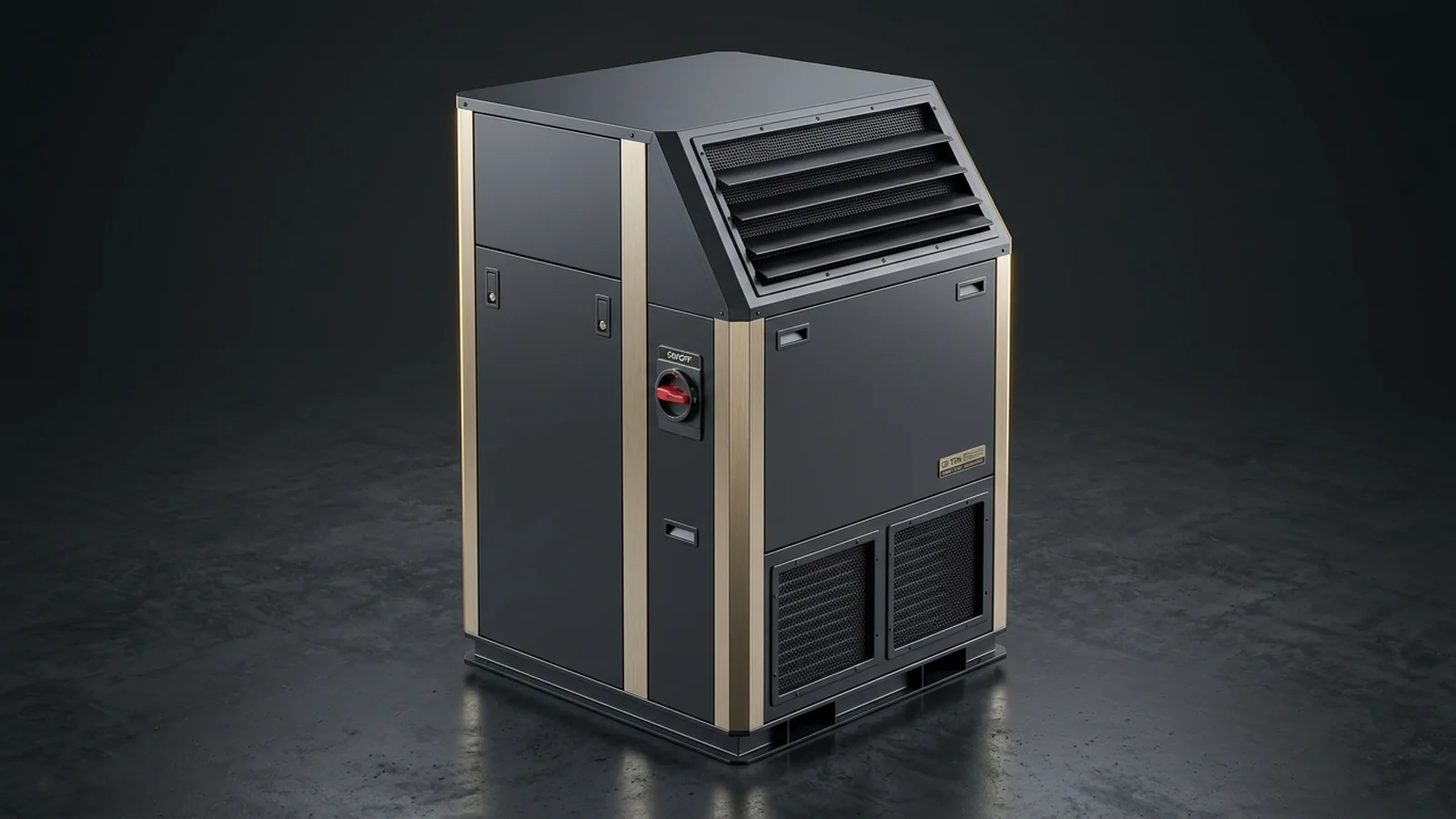
20 Ton Commercial Floor-Standing HVAC Cabinet (FD-HVAC-020)
Equipped with an integrated RS-485 Modbus RTU and RJ45 BACnet IP network gateway, streaming 64+ live diagnostic telemetry points directly into central government Building Management Systems.
Model Your Venue & Estimate HVAC Tonnage in 3D
Use the Fusion Developers interactive 3D Structure & Marquee Configurator to dimension spans from 15m to 60m, simulate guest heat loads, and compute instant multi-currency Bill of Quantities (BOQ).
Related Commercial HVAC Engineering Dossiers
Secretariat Convention Hall HVAC Systems
Displacement ventilation and low-noise government cooling.
Inverter Efficiency Life-Cycle Energy Savings
Calculate ROI and energy savings in public buildings.
PPRA & PEC Compliant HVAC Tender BOQs
Standard bidding documents and technical matrices.
Engineering & Procurement Inquiries
Q: What protocols do Fusion Developers commercial HVAC cabinets support for BMS?
Units natively support BACnet/IP (Annex J Ethernet), BACnet MS/TP (RS-485), and Modbus RTU (RS-485 serial), enabling seamless integration into Honeywell, Siemens, Johnson Controls, and Schneider Electric BMS platforms.
Q: What parameters can be monitored remotely via the BMS network?
Over 64 live telemetry points are streamed, including return/supply temperatures, humidity, suction/discharge pressures, evaporator superheat, 3-phase electrical voltages, power consumption (kW), and detailed diagnostic fault codes.
Q: How does Demand-Controlled Ventilation (DCV) save energy in government halls?
DCV uses indoor CO2 sensors to modulate fresh air dampers. When occupancy is low, dampers close to minimum positions, saving up to 35% in cooling energy by not having to chill unnecessary outdoor air in 45°C summer heat.
Q: Are Fusion Developers HVAC controllers secure against cyber threats?
Yes. Controllers operate on a completely local, air-gapped MEP network with zero cloud dependency. A physical hardware write-protect switch prevents unauthorized remote firmware modifications on government networks.
Request Stamped Psychrometric Calculations or Tender BOQ
Our senior mechanical HVAC engineers provide certified thermal heat balance assessments, electrical single-line schematics, and factory-direct equipment supply across Pakistan.
Consult Chief Engineer on WhatsApp (+92 332 2227426)