Secretariat & Legislative Convention Hall Climate Systems: Diplomatic IEQ & Low-Noise Engineering
Government legislative assemblies, ministerial secretariats, and grand civic convention centers host state delegations, parliamentary debates, and international summits. These monumental chambers require pristine indoor environmental quality (IEQ), whisper-quiet NC-30 acoustics, high-level chemical filtration against urban smog, and discrete architectural integration.
1. Civic & Diplomatic Indoor Environmental Quality (IEQ) Standards
High-level government assembly chambers—such as provincial assembly halls, federal secretariat auditoriums, and diplomatic conference centers in Islamabad and Lahore—demand exceptional Indoor Environmental Quality (IEQ). In these high-stakes legislative environments, environmental discomfort directly impairs diplomatic focus, cognitive function, and parliamentary decorum.
Thermal comfort must comply strictly with ASHRAE Standard 55 (Thermal Environmental Conditions for Human Occupancy), targeting a Predicted Mean Vote (PMV) between -0.2 and +0.2 and Predicted Percentage of Dissatisfied (PPD) occupants below 6%. This requires maintaining uniform room dry-bulb temperature (21.5°C +/- 0.8°C) with vertical temperature gradients between head and ankle levels constrained to less than 1.5°C.
Simultaneously, indoor air quality must eliminate high CO2 concentrations that induce lethargy and drowsiness during lengthy parliamentary budget debates, requiring continuous demand-controlled fresh air dilution.
THERMAL COMFORT PREDICTION CRITERIA (ASHRAE 55):
PMV = [0.303 * exp(-0.036 * M) + 0.028] * L
Where M = Metabolic rate (1.0 Met for seated diplomats), Clothing = 1.0 Clo (formal 3-piece suits).
Target PMV: 0.0 (Thermal Neutrality) achieved at T_operative = 21.8°C, v_air = 0.15 m/s, RH = 50%.
2. Acoustic Speech Intelligibility (STI > 0.65, Noise Criteria NC-30)
In a legislative assembly or constitutional convention hall, speech intelligibility is of paramount legal and procedural importance. Parliamentary floor proceedings, simultaneous interpretation audio, and broadcast media feeds require background acoustic ambient noise to achieve Noise Criteria NC-30 (sound pressure <= 45 dBA across mid-frequencies).
Speech Transmission Index (STI) must exceed 0.65 ('Excellent' intelligibility). Standard high-velocity commercial package units generate air hiss across supply grilles that masks consonantal speech frequencies (2,000 Hz to 4,000 Hz), making delegates strain to hear floor speeches.
Fusion Developers convention-grade cabinets employ massive, oversized double-skin sound attenuation plenums and low-speed backward-curved impellers operating below 750 RPM. Discharge face velocities are engineered to remain under 1.5 m/s, eliminating air turbulence hiss and maintaining pristine, broadcast-quality acoustic quiet.
3. Floor-Plenum Low-Velocity Displacement Air Distribution Mechanics
Traditional overhead mixing ventilation dumps cold air down from high ceilings, creating uncomfortable cold drafts on delegates' heads and shoulders while stirring up floor dust. In modern civic auditoriums, Displacement Ventilation via Underfloor Air Distribution (UFAD) is the gold standard.
Conditioned air is delivered into a pressurized underfloor plenum and discharged into the hall through low-velocity swirl floor diffusers positioned beneath each delegate desk. Supply air is introduced at a gentle 18.0°C to 19.0°C at very low velocity (<0.3 m/s).
As the cool air absorbs body heat from seated delegates, natural thermal convection plumes carry the warmed air and exhaled CO2 upward toward high ceiling extract grilles. Delegates enjoy a continuous micro-envelope of fresh, clean, draft-free air, while energy efficiency improves by 24% because the upper 60% of the room volume does not require deep cooling.
4. Multi-Stage Chemical Carbon Filtration for City Smog & Ozone Dilution
Government buildings located in major metropolitan centers (Lahore, Karachi, Rawalpindi) face severe outdoor air pollution—including toxic winter photochemical smog (PM2.5 > 350 ug/m³), vehicle nitrogen dioxide (NO2), sulfur dioxide (SO2), and ground-level ozone.
Drawing raw outdoor ventilation air into a legislative chamber without chemical purification induces respiratory irritation, eye burning, and coughing among diplomats. Standard dust filters trap particulate matter but allow gaseous toxic smog molecules to pass through unaffected.
Fusion Developers secretariat cabinets incorporate multi-stage Molecular Chemical Gas-Phase Filtration. Downstream of particulate pre-filters, air passes through deep-bed activated carbon and potassium permanganate (KMnO4) impregnated alumina chemisorption media. This chemical matrix chemically adsorbs toxic gases, ozone, and volatile organic compounds (VOCs), ensuring pure, breathable air inside state chambers.
5. VIP Tiered Zoned Thermostatic Management for Assembly Chambers
A parliamentary convention hall comprises distinct, thermally divergent zones: the high-intensity Speaker's Podium and Judicial Rostrum (surrounded by broadcast television spotlights), the main Parliamentary Delegate Floor (dense occupancy), and the elevated Public/Press Gallery (variable intermittent crowds).
Applying a single thermostat sensor across the entire chamber causes severe temperature imbalances—freezing the press gallery while the Speaker's bench overheats under 3,000 Watts of television lighting.
Our HVAC architecture deploys Tiered Multi-Zone Control. Modulating Variable Air Volume (VAV) terminal dampers dynamically proportion airflow to each sector based on localized temperature sensors. The Speaker's rostrum receives dedicated high-capacity displacement air, while the main floor and public galleries modulate independently, guaranteeing perfect thermal equilibrium across all parliamentary tiers.
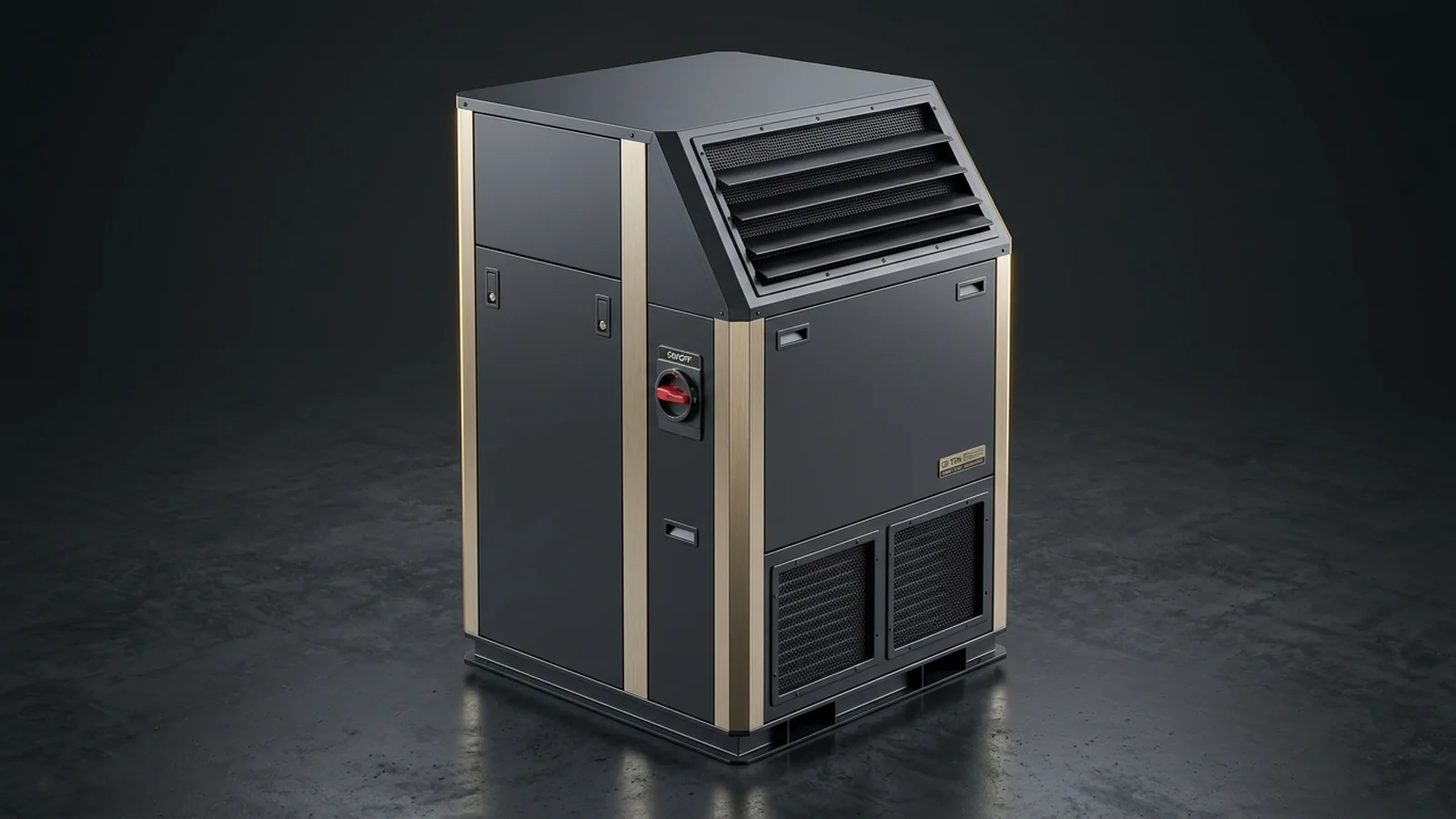
20 Ton Commercial Floor-Standing HVAC Cabinet (FD-HVAC-020)
Engineered for diplomatic convention spaces, delivering 8,000 CFM at low air velocities (<1.2 m/s), low acoustic emissions (<54 dBA), and multi-stage chemical carbon air purification.
Model Your Venue & Estimate HVAC Tonnage in 3D
Use the Fusion Developers interactive 3D Structure & Marquee Configurator to dimension spans from 15m to 60m, simulate guest heat loads, and compute instant multi-currency Bill of Quantities (BOQ).
Related Commercial HVAC Engineering Dossiers
BACnet & Modbus BMS Integration for Government Complexes
Centralized open-protocol building management integration.
Judicial Complex & Courtroom Climate Engineering
Ultra-quiet acoustic climate systems for judicial courts.
PPRA & PEC Compliant HVAC Tender BOQs
Standard public procurement specifications and evaluation matrices.
Engineering & Procurement Inquiries
Q: What acoustic criteria is required for government assembly and convention halls?
International standards mandate Noise Criteria NC-28 to NC-30 (sound levels below 45 dBA) and a Speech Transmission Index (STI) > 0.65 to ensure crystal-clear speech intelligibility for parliamentary debates and broadcast media.
Q: How does underfloor displacement ventilation work in legislative chambers?
Conditioned air is delivered at low velocity (<0.3 m/s) through floor diffusers beneath delegate desks. The air gently rises as it warms, carrying body heat and exhaled CO2 upward to ceiling exhaust vents without creating drafts.
Q: How does chemical carbon filtration protect against urban smog in Lahore/Islamabad?
Activated carbon and potassium permanganate chemisorption filters neutralize toxic gases, nitrogen dioxide, sulfur dioxide, and ozone from urban traffic and seasonal smog, ensuring clean, odorless air inside state chambers.
Q: Why is multi-zone VAV control needed in parliamentary auditoriums?
Different areas have radically different heat loads: the Speaker's podium has intense TV lighting, while the main floor and public galleries have varying crowd densities. Multi-zone control adjusts air delivery to each zone independently.
Request Stamped Psychrometric Calculations or Tender BOQ
Our senior mechanical HVAC engineers provide certified thermal heat balance assessments, electrical single-line schematics, and factory-direct equipment supply across Pakistan.
Consult Chief Engineer on WhatsApp (+92 332 2227426)