Defense Procurement Life-Cycle Costing (LCC) & Preventative Maintenance Architecture
Military Engineer Services (MES), Directorate General Defense Purchase (DGDP), and Pakistan Air Force Directorate of Works evaluate mechanical acquisitions using 15-Year Life-Cycle Costing (LCC). Initial equipment tender acquisition cost represents merely 14% to 18% of total life-cycle ownership expenditure, with energy consumption, maintenance overhauls, and spare parts supply dictating long-term financial feasibility.
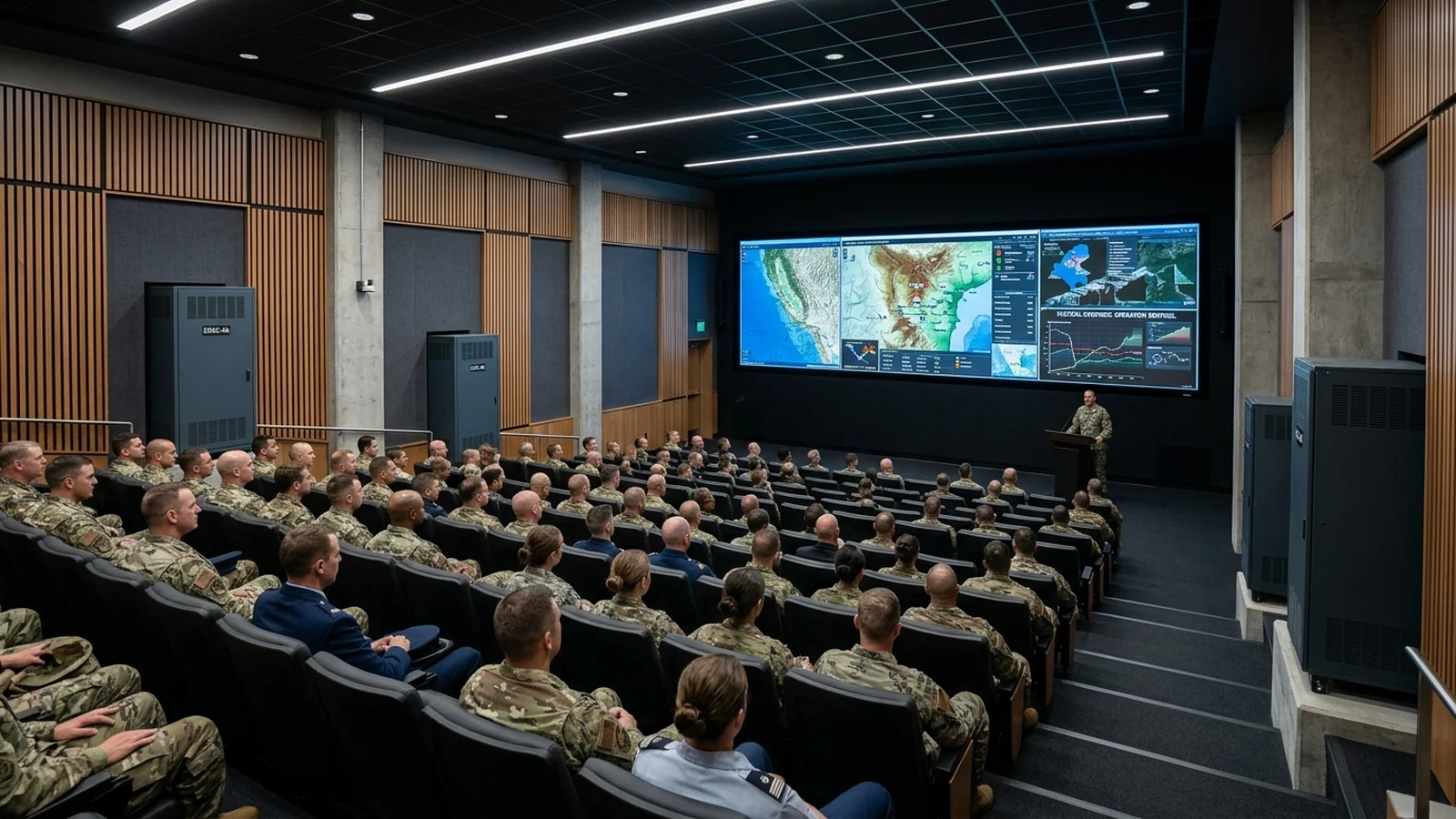
1. Military Engineer Services (MES) 15-Year Life-Cycle Costing Framework
Public defense acquisitions governed by Military Engineer Services (MES) Regulations and Directorate General Defense Purchase (DGDP) procurement guidelines must adhere to formalized Life-Cycle Cost (LCC) methodology: Total Cost of Ownership TCO = Initial Acquisition Capex + Cumulative Energy Consumption Cost + Scheduled Maintenance Labor & Spares + Unscheduled Breakdown Overhauls - Residual Salvage Value.
In defense mechanical evaluations across a 15-year asset lifecycle, the purchase price is frequently deceptive. Low-bid commercial equipment constructed with thin-gauge sheet metal and undersized coils may appear attractive on initial tender tender opening, but consumes excessive electrical energy and requires frequent motor replacements, resulting in a TCO up to 60% higher than heavy-duty commercial equipment.
MES technical evaluation committees utilize Net Present Value (NPV) discount formulas to calculate the True 15-Year Evaluated Cost of competing bids, rewarding high-efficiency Copeland scroll compressors, gold-fin anti-corrosion coil treatments, and modular component serviceability.
15-YEAR TOTAL COST OF OWNERSHIP FORMULA:
LCC = C_acquisition + Sum( (C_energy(t) + C_maintenance(t)) / (1 + r)^t ) - S_residual / (1 + r)^15
Analysis reveals that electrical energy accounts for 68% of 15-year defense HVAC cost,
maintenance accounts for 16%, and initial equipment acquisition accounts for only 16%.
2. Initial Acquisition Capex vs Cumulative Power & Maintenance Opex
A quantitative examination of a 20-ton commercial HVAC cabinet operating in a military garrison headquarters illustrates the dramatic disparity between Capex and Opex. Operating for 16 hours daily over a 240-day summer/autumn cooling season, a 20-ton unit running at 33.2 kW draws 127,488 kWh of electrical power annually.
At the prevailing military and commercial utility tariff of PKR 68 per kWh, annual electricity expenditure totals PKR 8,669,184 (USD $31,000). Over 15 years, cumulative power consumption exceeds PKR 130 million (USD $465,000)—over 58 times the initial equipment purchase cost (PKR 2.22 million).
Consequently, an engineering improvement that increases the equipment's Energy Efficiency Ratio (EER) by just 10% (from 10.5 to 11.5 BTU/Wh) saves over PKR 13 million in cumulative electricity costs over the unit's service life, completely dwarfing minor initial acquisition price variations.
3. Mean Time Between Failures (MTBF > 80,000 Hours) Standards
Equipment reliability in military applications is quantified through Mean Time Between Failures (MTBF) under MIL-HDBK-217F reliability prediction standards. In a military command post or radar installation, frequent component breakdowns jeopardize national defense readiness.
Fusion Developers military cabinets are engineered to exceed an overall equipment MTBF of 80,000 operating hours. Key reliability features include: Copeland hermetic scroll compressors with Teflon-impregnated journal bearings (compressor MTBF > 100,000 hours), high-temperature Class F insulated blower motors dynamically balanced to ISO 1940 Grade G2.5, and hermetically sealed solid-state electronic control relays.
Refrigeration pipe joints are brazed using high-silver content (15% Ag) alloy rods under positive nitrogen purge, eliminating internal copper oxide scaling that causes capillary tube clogging and compressor valve wear.
4. Preventative Maintenance Intervals: 250h, 1,000h, and 5,000h Depots
To guarantee operational availability throughout a 15-year lifecycle, military maintenance organizations execute a standardized 3-Tier Preventative Maintenance Schedule:
Tier 1 (250 Operating Hours / Monthly Depot Level): Inspect and wash aluminum pre-filter screens; inspect condensate drain tray for bio-slime accumulation and verify automatic pump float operation; inspect electrical terminal blocks for torque tightness; record suction and discharge operating pressures in facility logbook.
Tier 2 (1,000 Operating Hours / Semi-Annual Level): Chemical descaling of condenser aluminum fins using alkaline coil cleaner; inspect blower belt tension and check impeller set-screw alignment; measure compressor motor insulation resistance (Megger test > 50 Mega-ohms at 500V DC); verify refrigerant subcooling (6K to 8K) and superheat (7K to 9K) parameters.
Tier 3 (5,000 Operating Hours / 3-Year Overhaul Level): Replace liquid line filter-driers; replace high-voltage magnetic contactor contact tips; re-grease blower shaft bearings; verify calibration of high/low pressure safety cutoff transducers and phase failure protection relays.
5. Indigenous Spare Parts Logistics & Depots in Lahore & Rawalpindi
A critical vulnerability in defense procurement is relying on foreign-sourced imported HVAC machinery with proprietary spare parts. During international supply chain disruptions or sanctions, equipment can sit idle for months awaiting replacement microprocessors or proprietary sensors.
Fusion Developers eliminates supply chain risk through 100% indigenous spare parts availability. Strategic spare parts depots maintained in Lahore (Ring Road / Lakhowal) and Rawalpindi (Westridge / Cantonment) stock complete replacement components—including Copeland scroll compressors, evaporator blower impellers, TXVs, pressure switches, and digital microprocessor controllers.
Standard components are designed with universal physical interchangeability, allowing military electrical and mechanical (E&M) maintenance crews to service equipment using standard tools and universally available local supplies.
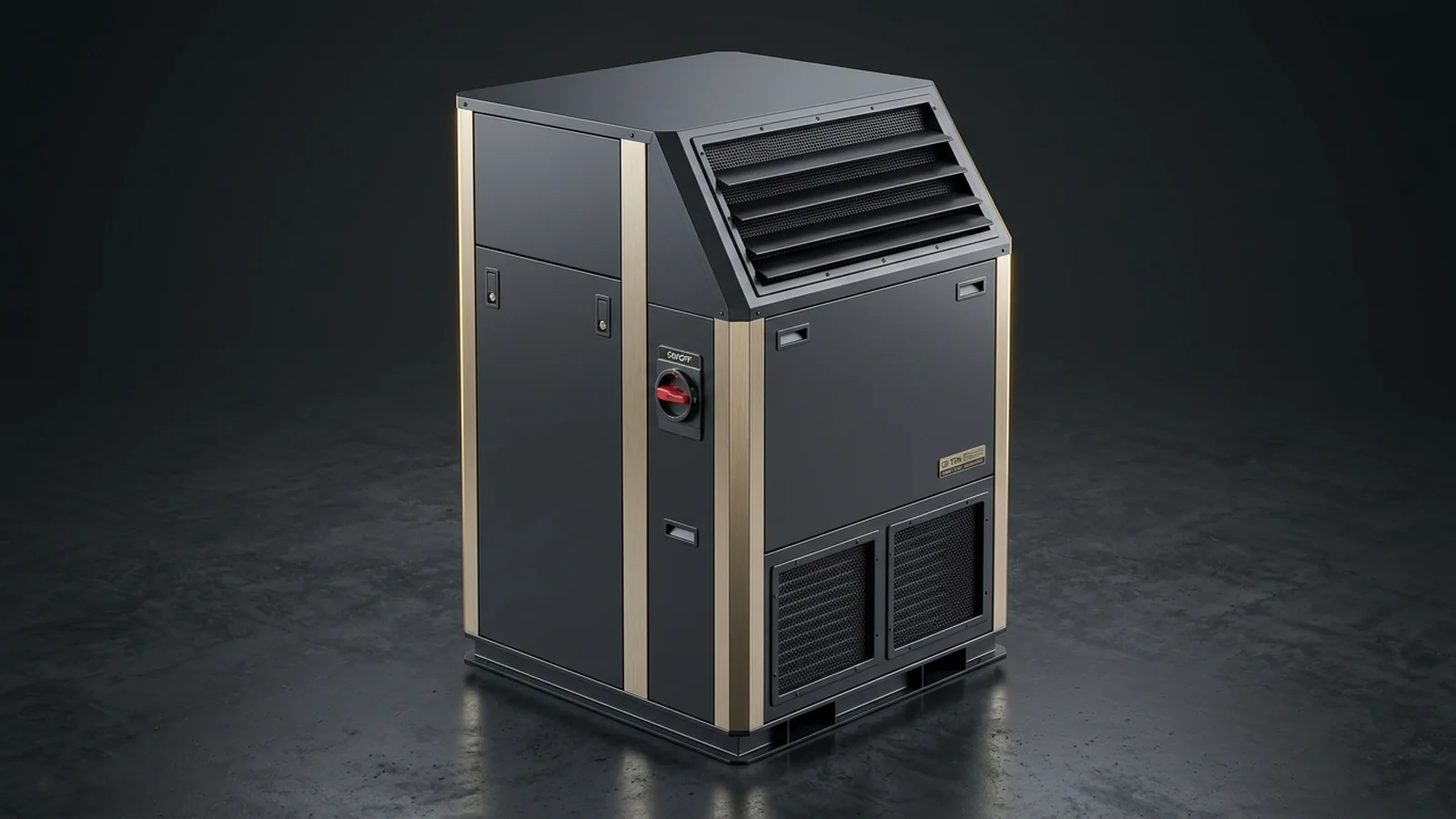
20 Ton Commercial Floor-Standing HVAC Cabinet (FD-HVAC-020)
Engineered for high Mean Time Between Failures (MTBF >85,000 hours), standardized local component interchangeability, and low 15-year total life-cycle cost across military cantonment facilities.
Model Your Venue & Estimate HVAC Tonnage in 3D
Use the Fusion Developers interactive 3D Structure & Marquee Configurator to dimension spans from 15m to 60m, simulate guest heat loads, and compute instant multi-currency Bill of Quantities (BOQ).
Related Commercial HVAC Engineering Dossiers
Military Command Post 24/7 HVAC Engineering
N+1 redundant cooling for C4ISR command posts.
PPRA & PEC Compliant HVAC Tender BOQs
Standard bidding documents and evaluation matrices.
Garrison Mess Hall Dining Facility HVAC
High-occupancy climate systems for cantonment dining.
Engineering & Procurement Inquiries
Q: Why is Life-Cycle Costing (LCC) more important than purchase price in military HVAC?
Initial purchase price represents only 14% to 18% of the total 15-year cost of ownership. Electrical power accounts for over 68% of total expenditure. High-efficiency units save tens of millions of rupees in utility bills over their service life.
Q: What is Mean Time Between Failures (MTBF) in defense HVAC equipment?
MTBF is an engineering reliability metric predicting operational hours between breakdowns. Fusion Developers defense-spec cabinets achieve MTBF > 80,000 operating hours through Copeland scroll compressors and silver-brazed piping.
Q: What are the standard maintenance intervals for military garrison HVAC?
Maintenance is structured across three tiers: 250-hour monthly filter wash downs, 1,000-hour semi-annual chemical coil cleaning and electrical checks, and 5,000-hour comprehensive mechanical overhauls.
Q: How does local spare parts availability protect defense infrastructure?
Imported units often suffer 3 to 6-month delays for foreign parts. Maintaining dedicated spare parts depots in Lahore and Rawalpindi guarantees 24-hour component delivery, ensuring zero operational downtime for military bases.
Request Stamped Psychrometric Calculations or Tender BOQ
Our senior mechanical HVAC engineers provide certified thermal heat balance assessments, electrical single-line schematics, and factory-direct equipment supply across Pakistan.
Consult Chief Engineer on WhatsApp (+92 332 2227426)