Military Garrison Mess Hall Climate Engineering: Occupancy Surges & Kitchen Odor Containment
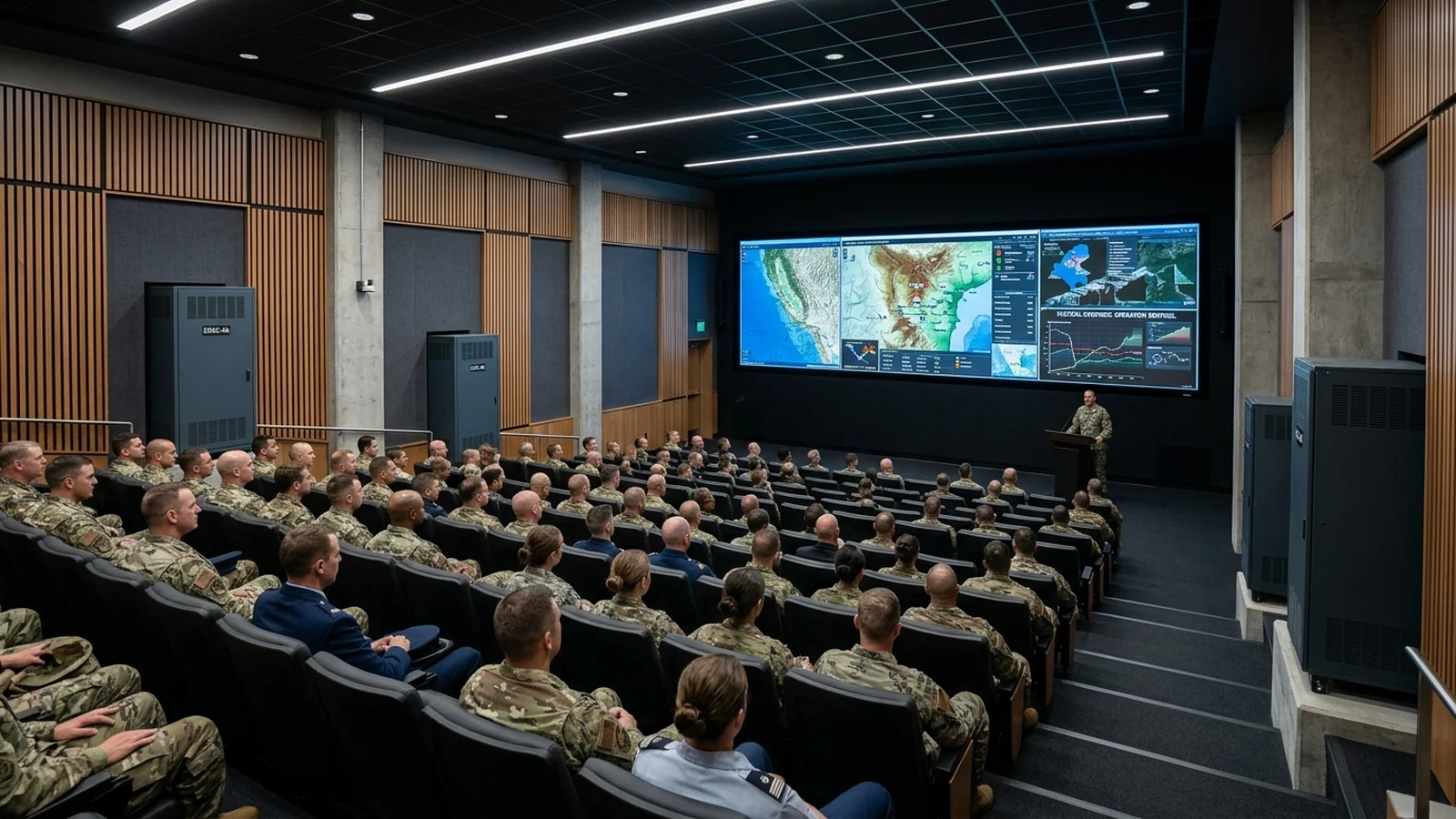
Army cantonment dining facilities and troop mess halls experience extreme, rapid occupancy swings—transitioning from an empty hall to 1,200 soldiers in full tactical uniform within a 30-minute meal window. Handling intense metabolic sensible/latent loads while maintaining positive air pressure boundaries against commercial kitchen odors requires specialized HVAC staging.
1. Rapid Occupancy Surge Dynamics (1,000+ Troops in 30 Minutes)
Military garrison mess facilities (DFACs) operate on rigid, synchronized military schedules. Unlike commercial restaurants where guest arrival is distributed across several hours, troop mess halls experience sudden step-function load surges: 800 to 1,200 soldiers enter the dining hall simultaneously at 07:00, 12:30, and 19:30 hours.
Soldiers entering from outdoor drilling or field exercises dissipate significant metabolic heat—averaging 550 BTU/hr sensible and 350 BTU/hr latent heat per person. A battalion of 1,000 troops introduces 900,000 BTU/hr (75 Tons of Refrigeration) of instantaneous internal thermal and moisture load within a 30-minute span.
If the climate system cannot ramp compressor capacity quickly enough, room temperature surges by 5°C to 7°C, accompanied by dense humidity buildup that fogs glass windows and creates an uncomfortable, stifling dining atmosphere. Multi-stage compressor staging with anticipatory pre-cooling routines is essential to absorb this surge.
SURGE ENTHALPY STEP-LOAD EQUATION:
Delta_Q_occupancy = N_troops * (q_sensible + q_latent)
For 1,000 troops: Delta_Q = 1,000 * (550 + 350) = 900,000 BTU/hr (75.0 TR).
Air handling units must step from 25% holding load to 100% full capacity within 120 seconds of surge trigger.
2. Differential Pressure Air Zoning Against Kitchen Odors
A critical engineering challenge in high-occupancy dining facilities is preventing cooking odors, grease aerosols, and steam from commercial kitchen ranges from migrating into the conditioned dining area.
In accordance with ASHRAE Handbook and NFPA 96 standards, mess halls must maintain strict Differential Pressure Air Zoning. Commercial kitchen areas are engineered with negative air pressure (-15 Pa to -25 Pa relative to outdoors) via heavy-duty kitchen exhaust hoods.
Conversely, the troop dining hall is maintained under deliberate Positive Air Pressure (+10 Pa to +15 Pa relative to the kitchen). When pass-through food service counters or dining room doors open, conditioned air flows naturally inward from the dining hall into the kitchen, creating an invisible aerodynamic air barrier that 100% blocks food odors, curry aromas, and cooking steam from entering the dining space.
3. ASHRAE 62.1 High-Volume Outdoor Fresh Air Dilution (15 CFM/Person)
High troop density within an enclosed dining hall causes rapid accumulation of Carbon Dioxide (CO2), human bio-effluents, and food aromas. Under ASHRAE Standard 62.1 (Ventilation for Acceptable Indoor Air Quality), dining facilities require a minimum outdoor air rate of 7.5 CFM per person plus 0.18 CFM per square foot of floor area.
For a 1,000-soldier dining hall, this dictates delivering a continuous minimum of 12,000 to 15,000 CFM of outdoor fresh air. In 46°C summer heat in South Punjab cantonments (Multan, Bahawalpur, Okara), bringing in 15,000 CFM of unconditioned outdoor air introduces over 45 tons of raw ventilation thermal load.
Fusion Developers cabinets handle this through integrated economizer dampers and dedicated high-capacity fresh air mixing plenums. Modulating motorized dampers dynamically adjust fresh air intake based on real-time CO2 readings, providing maximum outdoor air during peak meals and throttling back to energy-saving baseline ventilation between meals.
4. Heavy-Gauge Stainless Steel Casing & Washable Pre-Filtration
Mess hall HVAC cabinets are deployed in demanding, high-traffic garrison environments where daily sanitation, wet floor washing, and abrasive foot traffic are routine. Standard thin-gauge painted mild steel casings quickly corrode near floor plinths from mop detergent splash.
Fusion Developers mess-hall specification units feature ruggedized construction: external casings are fabricated with a 300mm lower plinth of Grade 304 satin-finish stainless steel that completely resists chemical detergents, floor strippers, and moisture corrosion.
Return air intakes are equipped with tool-less quick-release Grade G4 washable expanded aluminum pre-filter screens. These can be removed by cantonment maintenance personnel in under 60 seconds, washed with kitchen spray hoses to remove airborne food oil particles and dust, and immediately re-installed without purchasing consumable filter cartridges.
5. Staged Off-Peak Setpoint Energy Conservation in Garrison Routine
Military garrisons follow predictable, disciplined daily schedules. Dining halls are fully occupied for only 4.5 hours out of every 24-hour cycle (Breakfast 06:30–08:00, Lunch 12:30–14:00, Dinner 19:30–21:00). Running the HVAC plant at full capacity throughout the remaining 19.5 idle hours wastes millions of rupees in military utility budgets.
Integrated automated scheduling routines switch cabinets into an intelligent 3-Tier Conservation Mode. During idle hours (08:00–11:30 and 14:00–18:30), the room setpoint elevates to 28°C (82.4°F), compressor capacity drops to 25% or cycles off, and blower fans modulate to low-speed circulation.
Exactly 45 minutes prior to each scheduled meal call, the BMS initiates automated pre-cooling: compressors ramp to 100% capacity, pulling room temperature down to 21.5°C right as the first platoon enters the hall. This automated scheduling protocol slashes monthly military dining facility electricity consumption by over 42%.
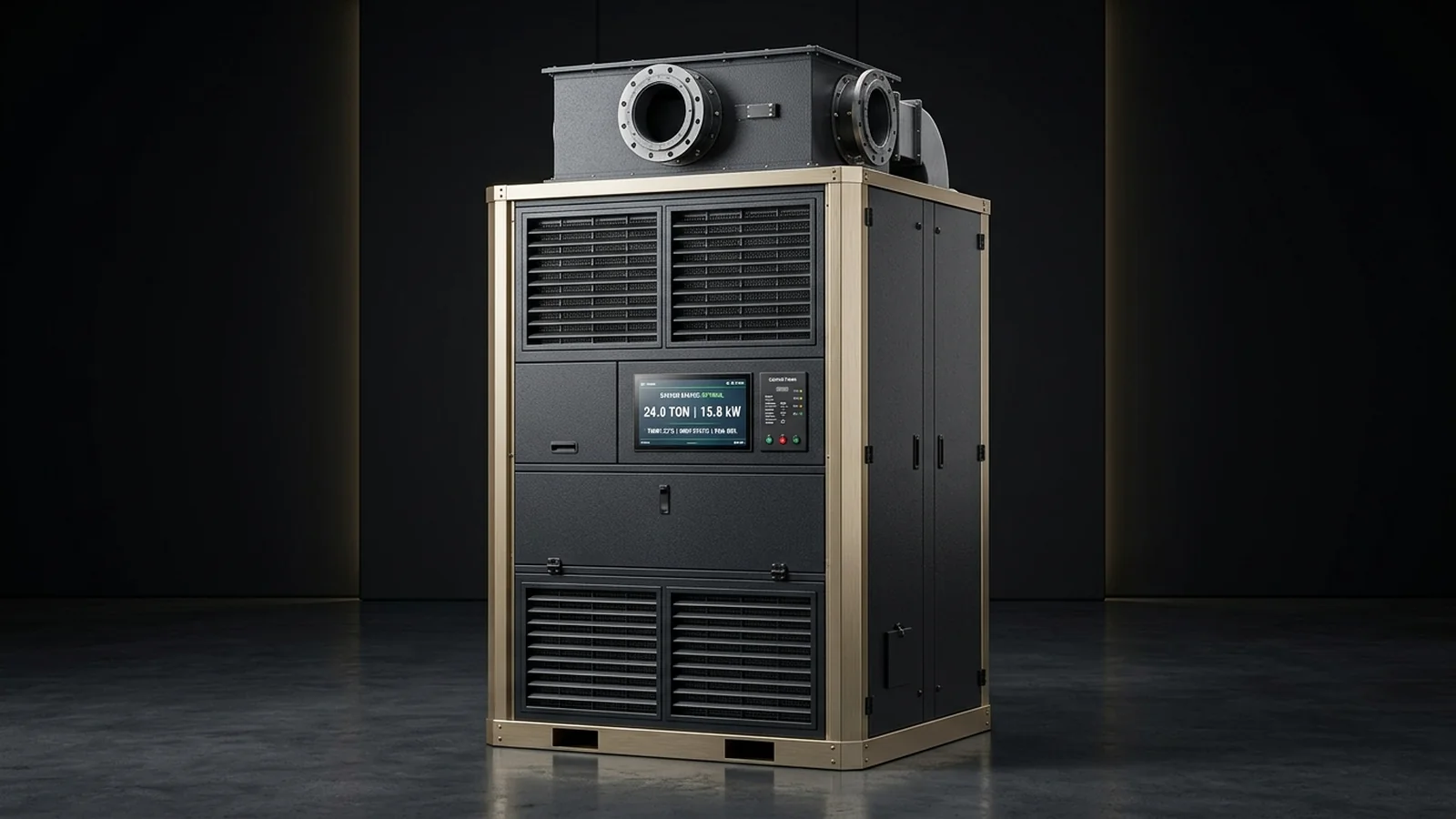
24 Ton High-Static Commercial HVAC Cabinet (FD-HVAC-024)
High-volume air delivery unit engineered to absorb rapid troop occupancy surges, featuring washable aluminum pre-filters and differential pressure zoning to block kitchen cooking fumes.
Model Your Venue & Estimate HVAC Tonnage in 3D
Use the Fusion Developers interactive 3D Structure & Marquee Configurator to dimension spans from 15m to 60m, simulate guest heat loads, and compute instant multi-currency Bill of Quantities (BOQ).
Related Commercial HVAC Engineering Dossiers
Military Command Post 24/7 HVAC Engineering
N+1 redundant cooling for tactical operations centers.
Defense Procurement Life-Cycle Costing & Maintenance
MES tender specifications, MTBF, and depot spare parts.
Marquee Tonnage Sizing: Sq Ft & Guest Count
Sensible and latent calculations for large dining halls.
Engineering & Procurement Inquiries
Q: How does HVAC handle 1,000 soldiers entering a dining hall at once?
A battalion of 1,000 troops introduces 75 tons of instantaneous heat. Anticipatory scheduling pre-cools the hall to 21.5°C 45 minutes before mealtime. When troops arrive, the pre-cooled building mass absorbs the heat shock while all compressor stages engage.
Q: How is kitchen cooking smell kept out of the troop dining hall?
Through differential air pressure zoning: the kitchen is maintained under negative pressure (-20 Pa) by exhaust hoods, while the dining hall is kept under positive pressure (+12 Pa). When doors open, air rushes into the kitchen, preventing odors from escaping into the hall.
Q: What ventilation rate is required for high-occupancy mess halls?
Under ASHRAE 62.1, mess halls require approximately 15 CFM of fresh outdoor air per person. For 1,000 soldiers, this equals 15,000 CFM of treated outdoor air to dilute CO2 and maintain fresh indoor air quality.
Q: How much electricity can be saved with automated mess hall scheduling?
Because mess halls are only occupied for ~4.5 hours per day, automated off-peak setback modes (raising temperature to 28°C between meals) reduce monthly HVAC electricity bills by over 42% compared to running continuously.
Request Stamped Psychrometric Calculations or Tender BOQ
Our senior mechanical HVAC engineers provide certified thermal heat balance assessments, electrical single-line schematics, and factory-direct equipment supply across Pakistan.
Consult Chief Engineer on WhatsApp (+92 332 2227426)