Desert-Rated T3 Climate Engineering: Heavy Sand Filtration & 52°C Ambient Cooling Architecture
Deploying commercial HVAC equipment in forward desert environments—such as Cholistan, Thar, and Balochistan border outposts—subjects equipment to extreme 52°C ambient temperatures, abrasive airborne sandstorms (aandhi), and alkaline mineral dust. Specialized filtration physics and ruggedized coatings are essential to prevent coil blockage and compressor burnout.
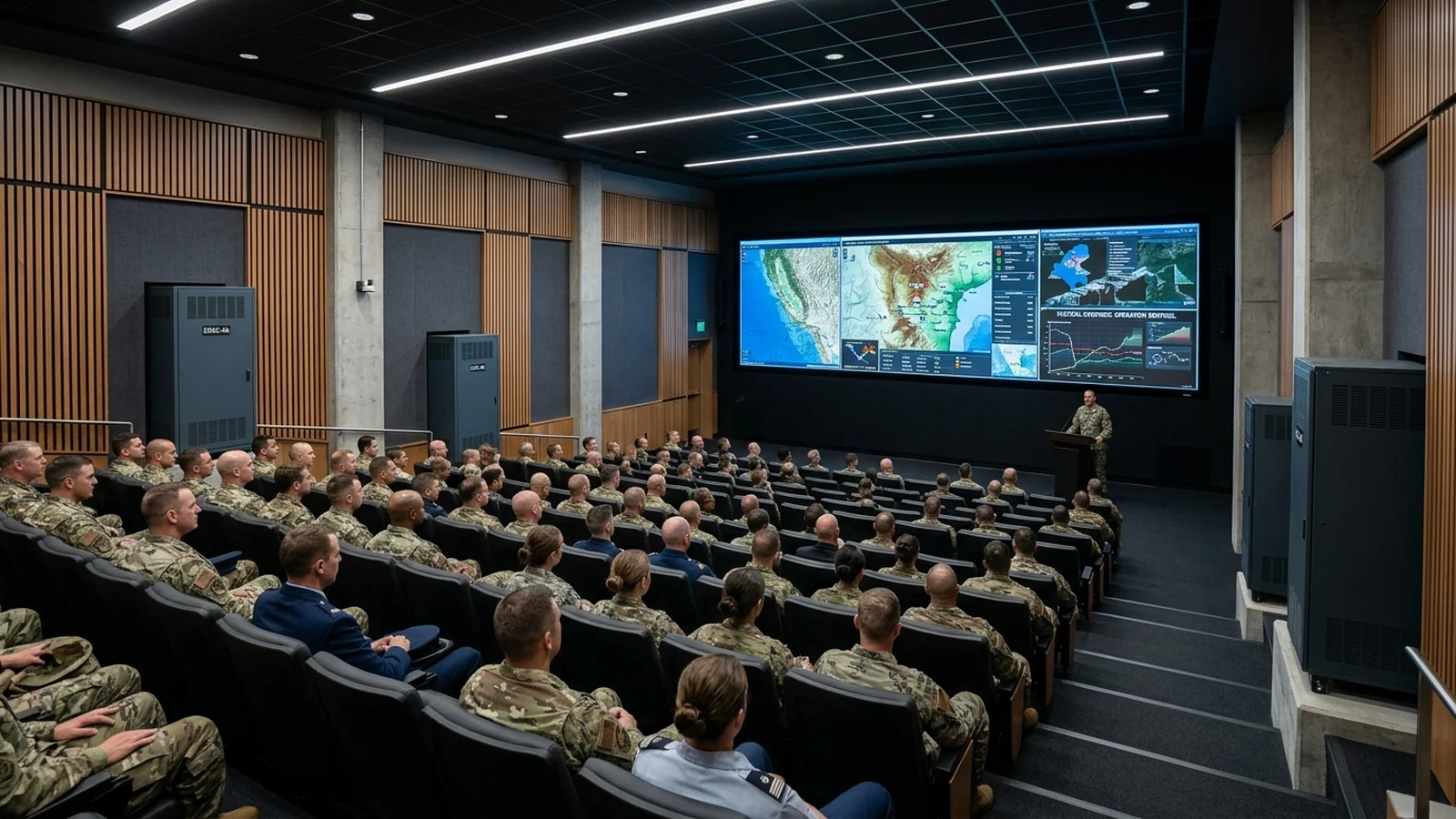
1. Forward Operating Base Climatic Stresses (52°C + Abrasive Silica)
Military garrisons, radar pickets, and tactical command posts deployed along Pakistan's southern and western border sectors face some of the harshest climatic environments on earth. Summer dry-bulb temperatures in Sibi, Turbat, and Rahim Yar Khan routinely peak above 50°C (122°F), with radiant ground soil temperatures exceeding 65°C.
Simultaneously, seasonal dust storms carry high concentrations of airborne silica dust (particle diameters ranging from 1 to 100 microns). Microscopic quartz particles are exceptionally abrasive (hardness 7 on Mohs scale). When drawn across high-velocity condenser coils, these particles erode aluminum fin edges, strip protective anti-corrosive coatings, and pack tightly between fin gaps, completely choking airflow within 72 hours of dust-storm exposure.
Standard commercial equipment subjected to these conditions suffers rapid airflow choking, condenser high-pressure lockout, motor bearing seizure from dust ingress, and electrical contactor arcing. Military-grade HVAC engineering requires an integrated defense-in-depth filtration architecture.
INERTIAL SAND PARTICLE DYNAMICS FORMULA:
Stokes Number Stk = (rho_p * d_p^2 * U) / (18 * mu * D_c)
Where particle density rho_p = 2,650 kg/m³, air velocity U = 12 m/s.
For sand particles >20 microns, Stk >> 1, ensuring inertial separation efficiency exceeds 88%.
2. Inertial Self-Purging Sand Separation Louver Aerodynamics
The primary defense mechanism against heavy desert sand is aerodynamic inertial separation. Rather than allowing raw outdoor sand to impact filtration media where it would instantly cause pressure drop spikes, air enters through specialized Inertial Sand Trap Louvers.
Inertial louvers utilize aerodynamic, vertically arranged U-channel baffles that force entering air through sudden, tortuous 180° direction reversals at high localized velocities. Because airborne sand and grit particles possess far higher momentum and inertia than air molecules (Stokes number Stk > 1), they cannot execute the rapid fluid turn.
The sand particles decouple from the airstream, collide with the internal vertical baffle walls, and decelerate downward into self-purging vertical gravity drop slots located at the base of the louver assembly. Sand continuously exhausts harmlessly onto the ground, eliminating up to 90% of coarse airborne dust (particles >30 microns) with zero filter media consumption.
3. 3-Stage Filtration Hierarchy (Inertial + G4 Washable + F7 Dust Media)
Downstream of the inertial louvers, air passes through a rigorous 3-Stage Filtration Hierarchy designed to protect indoor command centers and sensitive communication electronics according to EN 779 and ISO 16890 standards.
Stage 1 (Pre-Filtration): Heavy-duty, washable Grade G4 aluminum mesh filters (coarse dust arrestance >90%). These dual-layer crimped wire mesh pre-filters capture intermediate sand grains and can be easily washed with pressurized water or blown clean with compressed air during routine field maintenance, requiring zero consumable spares.
Stage 2 (Fine Particulate Filtration): Compact V-bank Grade F7 / ePM1 60% synthetic media filters that trap sub-micron silt, soot, and mineral aerosols before they reach evaporator surfaces, ensuring pristine indoor air quality for operational military personnel.
Differential pressure (Magnehelic) gauges across each filter bank monitor dust loading in real time. Visual LED telemetry and BMS contact signals alert technicians when static pressure drop across the media exceeds 180 Pa, signaling that filter servicing is required.
4. Electro-Coated Hydrophilic Condenser Coils Resisting Alkaline Pitting
Desert dust across Cholistan and Thar contains high concentrations of alkaline salts, calcium carbonates, and sodium chloride. When ambient moisture condenses on condenser coil surfaces during cool desert nights, these salts dissolve into corrosive alkaline solutions that induce severe pitting corrosion on standard bare aluminum fins.
To ensure a 15-year operational service life in defense service, Fusion Developers desert-edition condenser coils are completely coated with cathodic electro-deposition epoxy coatings (Electro-Fin / E-Coat). The entire coil assembly—including copper tubes, aluminum fins, and galvanized steel tube sheets—is submerged in a charged polymer bath, depositing a uniform 25-micron protective barrier across every microscopic crevice.
E-coated coils resist over 10,000 hours of continuous salt spray testing (ASTM B117) and 3,000 hours of acidic salt spray (ASTM G85 Annex A3) while maintaining thermal heat transfer efficiency within 1.5% of bare metal.
5. Heavy Sand-Blast Resilient Powder Coating (ASTM B117 1,000-hr)
Equipment structural casings stationed in open desert terrain are subjected to constant micro-abrasion from windborne sand particles acting as natural sandblasting media. Substandard paint finishes erode down to bare metal within two seasons, leading to rapid casing perforation.
Our desert cabinets are fabricated from heavy-gauge 1.6mm hot-dipped zinc-galvanized structural steel sheets (Z275 coating mass). Following automated robotic CNC laser cutting and folding, panels undergo a multi-stage iron-phosphate pre-treatment before receiving a tough 80-micron architectural-grade TGIC polyester thermoset powder coating in military desert sand (RAL 1001) or olive drab.
External electrical disconnect switches, control boxes, and compressor bay access latches feature IP65-rated silicon perimeter gaskets and quarter-turn stainless steel compression locks that completely prevent dust ingress into critical electrical components.
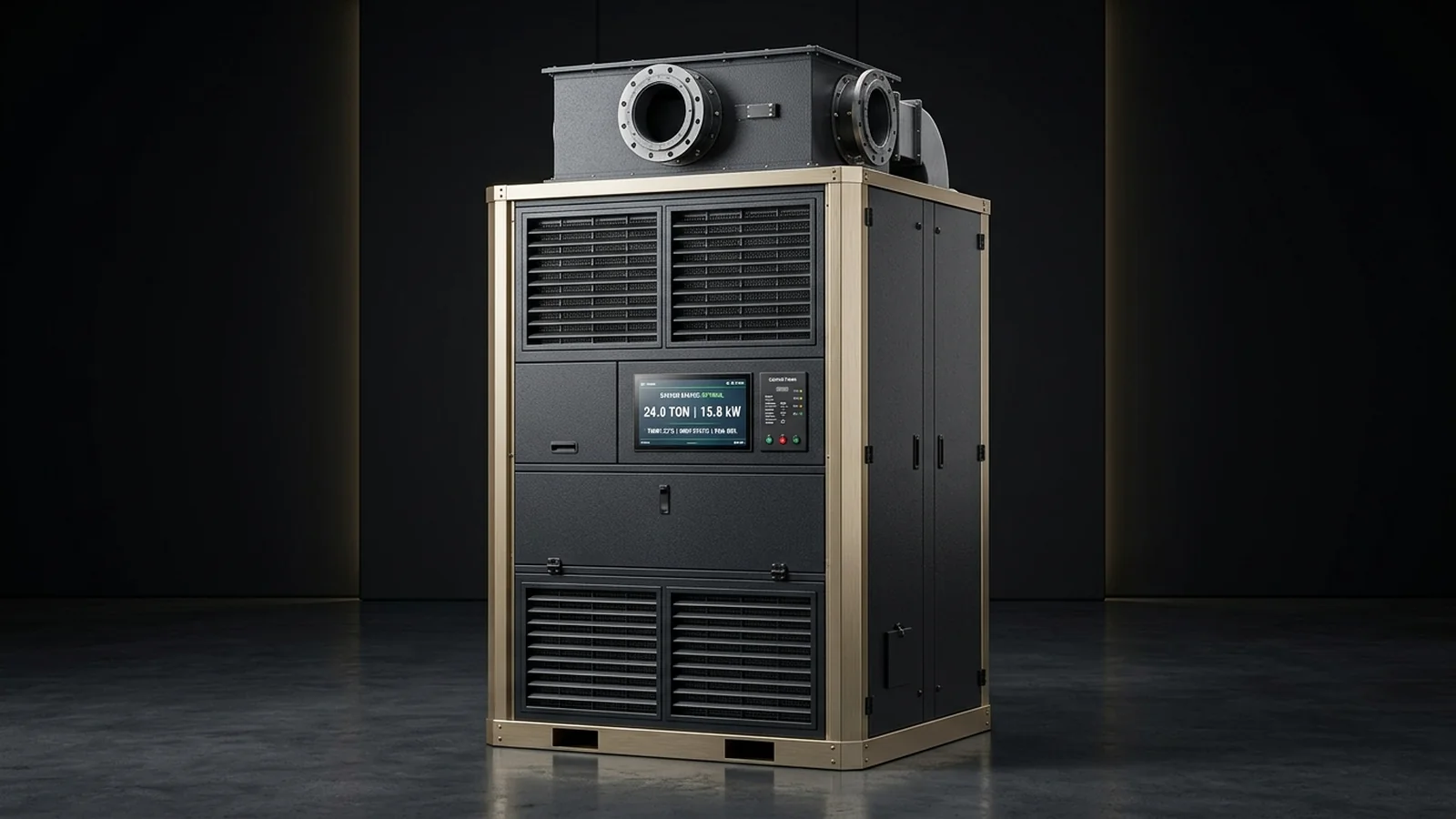
24 Ton High-Static Commercial HVAC Cabinet (FD-HVAC-024)
Purpose-built for harsh desert outposts, featuring heavy-duty inertial sand-separating louvers, dual-circuit T3 tropicalized Copeland scrolls, and electro-coated coils resisting abrasive silica erosion.
Model Your Venue & Estimate HVAC Tonnage in 3D
Use the Fusion Developers interactive 3D Structure & Marquee Configurator to dimension spans from 15m to 60m, simulate guest heat loads, and compute instant multi-currency Bill of Quantities (BOQ).
Related Commercial HVAC Engineering Dossiers
Military Command Post 24/7 HVAC Engineering
N+1 redundant cooling for C4ISR command posts.
Rapid-Deploy Containerized Tactical HQ HVAC
Modular skid-mounted climate units for army shelters.
Multan & South Punjab Marquee Cooling Guide
Combat dust storms and 50°C ambient temperatures.
Engineering & Procurement Inquiries
Q: What makes an HVAC unit T3 tropical desert rated?
A T3 rated HVAC unit is engineered and tested to operate continuously in extreme ambient temperatures up to 52°C (125.6°F) without tripping on high pressure, featuring 35%+ larger condenser coils, high-ambient scroll compressors, and heavy-duty condenser fans.
Q: How does an inertial sand louver work without filters?
Inertial louvers force air through rapid 180° direction changes. Because heavy sand particles have high momentum, they cannot make the turn, hitting the baffle walls and dropping down through self-clearing gravity drainage slots.
Q: Why are standard AC condenser coils damaged in desert military bases?
Abrasive windborne silica sand physically strips aluminum fins and packs between fin spaces, blocking airflow. In addition, alkaline salts in desert dust cause galvanic pitting corrosion, destroying coils within 1–2 years.
Q: What is the maintenance protocol for sand filtration in forward operating bases?
Inertial louvers require zero consumable parts. Coarse G4 aluminum pre-filters are washed with water every 2 to 4 weeks depending on dust storm frequency, while F7 fine filters are replaced annually based on differential pressure readings.
Request Stamped Psychrometric Calculations or Tender BOQ
Our senior mechanical HVAC engineers provide certified thermal heat balance assessments, electrical single-line schematics, and factory-direct equipment supply across Pakistan.
Consult Chief Engineer on WhatsApp (+92 332 2227426)